

Nigerians Spend Billions on Looking Good. What’s the Business Behind It?
SEID Intel by Oluwatoyin
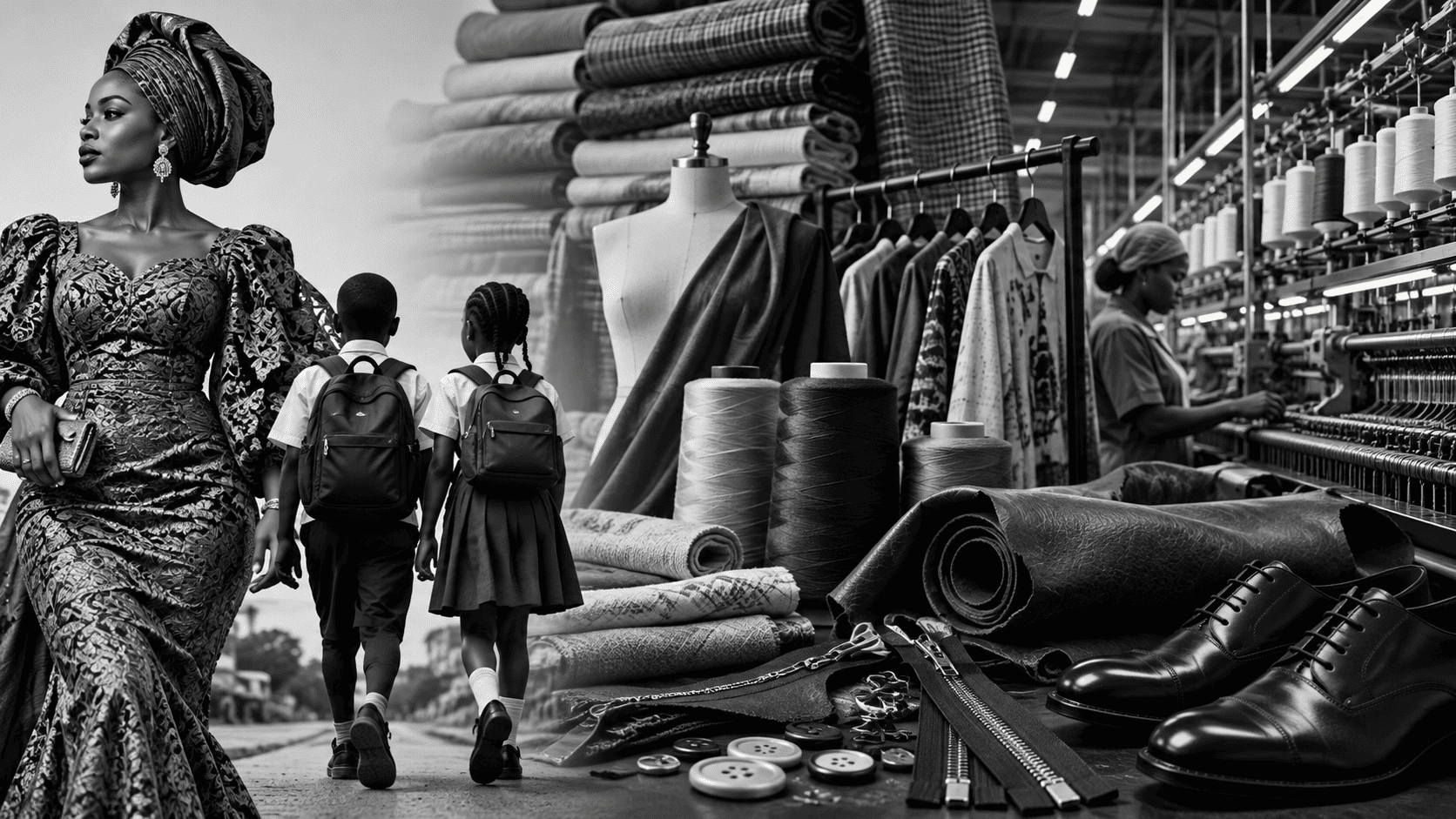
Think about how much money goes into getting dressed in Nigeria. There is the Aso Ebi for your friend’s wedding, the school uniforms parents have to buy, the outfit for a birthday party, and the clothes you pick up simply because you like them. We spend money on these things all the time. But have you ever wondered how much of that money goes into products made right here in Nigeria?
According to SEID’s Nigerian Manufacturing Opportunity Report 2026, Nigerians spend an estimated ₦436.25 billion every year on school uniforms alone. That is a huge market built around something as familiar as getting children ready for school.
But here is where it gets interesting.
Between 2024 and 2025, imports in Nigeria’s textiles, apparel and leather sector grew by 53.8%, while local production increased by just 5.8%. Imports also took up a larger share of the formal market, rising from 10.5% to 14.6%.
In simple terms, Nigerians are buying, but local production is not keeping pace with the growth in imports.
And the opportunity goes beyond opening a boutique or starting a fashion brand. Think about everything that goes into making the clothes and shoes we wear: fabric, thread, buttons, zips, leather and other materials. Each one represents another part of the supply chain, and a potential business opportunity.
Nigeria already has the demand. The question is how much of it local businesses can meet, from producing the materials to manufacturing finished products that people want to buy.
For entrepreneurs and investors, that is worth paying attention to. Sometimes, the opportunity is not in convincing people to spend more money. It is in finding better ways to supply what they are already spending money on.
SEID’s Nigerian Manufacturing Opportunity Report 2026 examines five subsectors: Food and Agro-processing; Textiles, Apparel and Leather; Chemicals and Pharmaceuticals; Cement and Steel; and Light Manufacturing and Packaging. Covering all 36 states, it looks at production trends, import patterns and the gaps between local supply and market demand.
The next time you buy an outfit, choose your Aso Ebi or shop for school uniforms, consider this: what if more of the money we spend on clothes stayed in Nigeria and supported local businesses?
To learn more about Nigeria’s manufacturing landscape, explore the findings in SEID’s Nigerian Manufacturing Opportunity Report 2026 at www.seidintel.com.
State revenues have grown significantly in recent years. A new World Bank report examines the figures and how states are allocating their budgets across key sectors.
 World Bank says states’ revenues rose 93% in two years but education spending declined
Nigeria’s 36 states recorded a 93% increase in real revenue between 2023 and 2025, while expenditure rose by 92%, according to the World Bank’s latest Nigeria Development Update.
The increase was attributed to exchange-rate reforms, petrol subsidy removal, improved revenue administration, higher federal allocations and stronger VAT collections.
Despite the revenue growth, education’s share of state expenditure fell from 14.9% in 2021 to 12.1% in 2025. Health spending remained relatively stable at about 7%, while social protection spending increased from 1.4% to 4.4%.
Capital expenditure rose to 61% of total state spending, driven largely by investments in transport infrastructure, housing, agriculture and other economic sectors.
The World Bank stressed that improved accountability, spending efficiency and investment in human capital are essential to ensuring that increased public revenues translate into better education, healthcare, infrastructure and living standards. It also projected average economic growth of 4.4% between 2026 and 2028, subject to sustained reforms and improved service delivery.
Here are a few other headlines that also caught my attention this week:
- Uzoka-Anite: FG targeting 10.3% GDP growth rate by 2030 under national development plan. Nigeria’s growth target is giving main character energy.
- NSDC unveils $7.1bn plan to raise Nigeria’s sugar output above 2m tonnes. Nigeria wants to sweeten the deal with local sugar.
- ‘To prevent waste’ — BPP DG urges CSOs to monitor projects from planning to delivery. A ribbon-cutting ceremony is not a performance review.
- NBET begins settling legacy debts owed to GenCos, gas suppliers. The power sector is settling old scores. Literally.
- World Bank says states’ revenues rose 93% in two years but education spending declined. The revenue is growing. Is the future getting the same investment?
- NSDC commits N2.2bn to develop Oyo sugar factory. From imported sugar to homegrown sweetness.
- N5.83bn disbursed to pay gratuity, pension benefits, says Ogun. Retirement should come with rest, not a waiting game for benefits.
- NCC: Nigeria’s data consumption increased by 47% in one year. More scrolling, more streaming, more pressure on the network.
- Nigeria, India agree to strengthen aviation, technical cooperation. From diplomatic handshakes to hangar space.
Just leaving that here.