



The Business Behind the Destination
SEID Intel by Oluwatoyin
A city can be known for one thing and still make money from ten others.
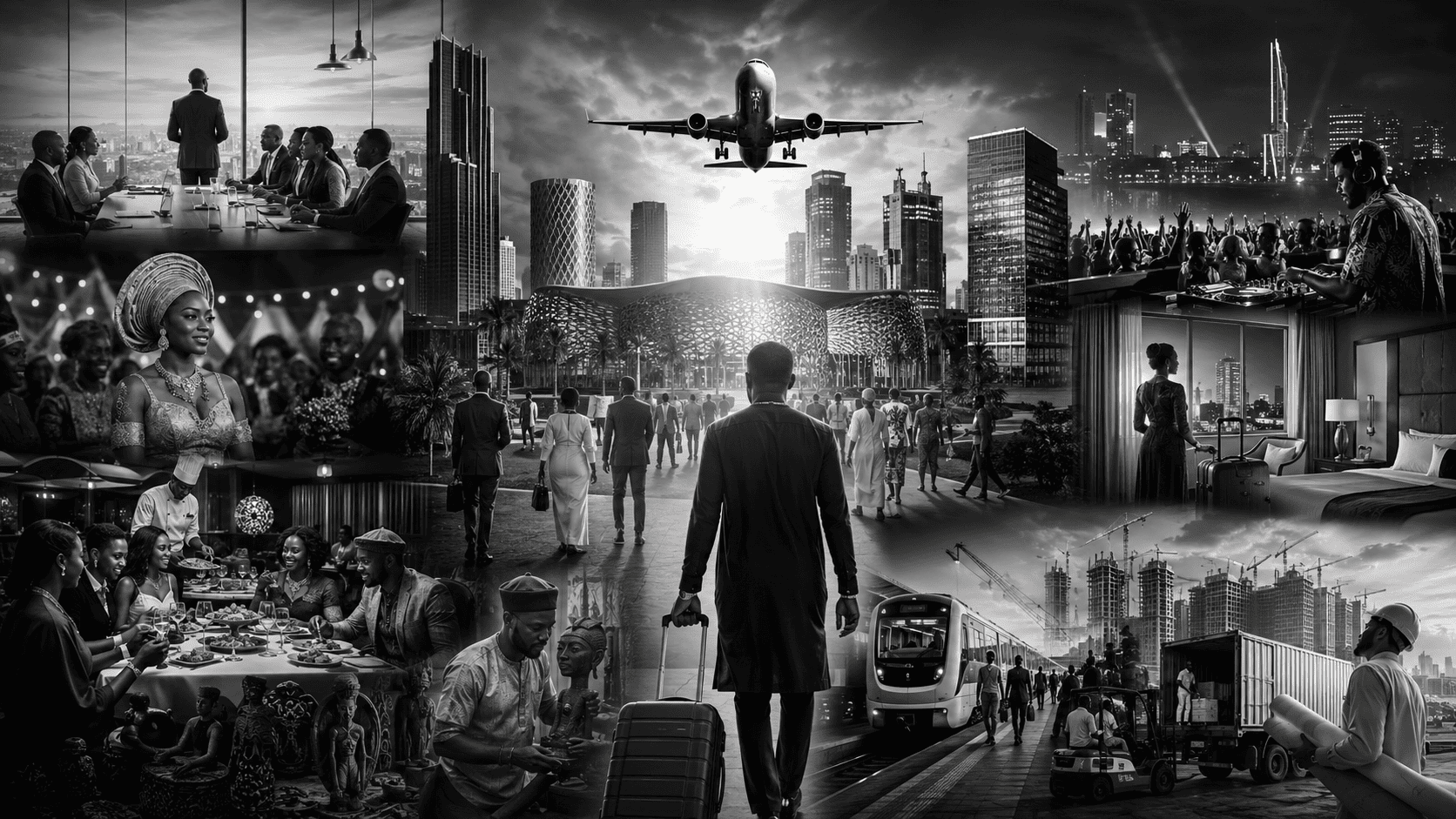
Someone may arrive for a conference and stay for the food. Another person comes for a wedding and discovers the nightlife. A visitor drawn by a festival may leave thinking about the business possibilities they saw along the way.
That is the part of tourism we do not talk about enough.
The value is not only in why people come. It is in everything that becomes possible once they do.
According to the World Travel & Tourism Council, Africa’s tourism sector is projected to contribute about US$241 billion to the continent’s economy in 2026 while supporting more than 31 million jobs. For Nigeria, the opportunity is not simply to attract more visitors, but to create stronger businesses, services and infrastructure around every arrival.
That shift in thinking stood out while following conversations from a recent tourism investment forum. The discussion wasn’t centred on proving that Africa has remarkable destinations. It focused on a more important question: how do we create more economic value from the destinations and experiences we already have?
At SEID, these are the conversations we naturally pay attention to. Because when an industry begins asking how to create more value instead of simply more visibility, it usually signals the beginning of a much bigger opportunity.
Nigeria already has many of the ingredients.
A globally recognised entertainment industry. Rich cultural festivals. Diverse cuisine. Religious and cultural gatherings. Business events that attract professionals from across Africa and beyond. A large diaspora that returns home for celebrations, holidays and investment opportunities.
Each journey creates a different kind of economic activity.
A business traveller may extend a trip and discover investment opportunities. A family visiting for a celebration supports hotels, restaurants and transport providers. A tourist attending a festival creates demand for local artisans, photographers, event companies and retailers. Every visitor interacts with businesses that may never describe themselves as part of the tourism industry.
That is why tourism should be viewed as an economic ecosystem rather than a leisure sector.
Hospitality, aviation, transport, agriculture, retail, entertainment, financial services, technology and logistics all benefit from the movement of people. The more connected those sectors become, the greater the economic return from every visit.
We’ve already seen this work elsewhere. Singapore transformed Marina Bay into an integrated ecosystem where conventions, hospitality, retail and entertainment reinforce one another. Morocco is investing in hotels, transport and visitor infrastructure ahead of the 2030 FIFA World Cup with a strategy designed to generate economic activity long after the tournament ends.
Africa’s opportunity is not to replicate those models, but to build ecosystems around its own strengths.
Business events can be paired with cultural experiences. Festivals can become platforms for local businesses. Creative industries can encourage visitors to extend their stay. Technology can make destinations easier to discover and book. Better collaboration between airlines, hotels, event organisers, tour operators and local businesses can ensure that more of the value created by every visitor stays within the local economy.
There are practical enablers that will determine how much of this opportunity is realised. Reliable transport, quality hospitality, stronger digital visibility and destination planning all influence the visitor experience. Security also plays an important role in building confidence for both visitors and investors. Strengthening these areas is not simply about improving tourism. It is about making local economies more competitive.
Strategic communication has an equally important role to play.
People are more likely to visit, return or invest when they understand what a destination offers and can clearly see the opportunities around it. Communicating that value effectively helps attract not only visitors, but also businesses, partnerships and investment.
That is the lens we bring to every sector at SEID. Whether it is energy, healthcare, finance or tourism, our role is to help organisations communicate opportunity in ways that build confidence, unlock investment and create lasting impact.
Africa does not need more reasons for people to visit.
It already has them.
The greater opportunity is making every arrival create more value than the last.
Because the real business behind a destination is not the destination itself.
It is the economy that grows around it.
Speaking of the systems that make industries grow, this story caught my attention last week.
NPA begins reconstruction of six berths at Rivers Port
The Nigerian Ports Authority has begun reconstructing six berths at Rivers Port, alongside BUA Group’s $85 million terminal expansion in Port Harcourt.
The project is expected to increase cargo throughput by between 13 and 14 percent and provide about 600 metres of quay frontage. It will also support BUA Foods’ planned increase in raw material imports to more than two million tonnes annually.
The wider economic value is in the additional activity this capacity could support across manufacturing, logistics, transportation, supply and trade. It could also strengthen the competitiveness of eastern ports and contribute to higher revenue generation.
Here are a few other headlines that also caught my attention this week:
FRC to examine AI’s impact on audit integrity, financial reporting. Even AI will soon have to show its workings.
IN DETAIL: Stock market traders transact N404bn deals — up by 32%. The Nigerian Exchange recorded ₦404.76 billion in share transactions during the week.
FG to phase out power sector subsidy from next year. Power subsidy is leaving in 2027. Hopefully, the power stays.
ICYMI: SEC to begin full e-registration for capital market operators. SEC is going paperless. Somewhere, a printer just felt a disturbance.
Nigeria, Canada to resume direct flight talks on August 6. Direct flights to Canada? Our luggage can finally stop changing countries more than we do.
Banks’ bad loans rise above CBN limit as consumer credit debt falls to N3.7trn. The banking sector’s non-performing loan ratio rose above the CBN’s prudential benchmark in 2025.
FG inaugurates remodelled Kano airport domestic terminal. Kano airport entered its renovation era.
FG to establish housing finance authority to boost affordable home ownership. FG wants more Nigerians to own homes. Landlords have quietly left the group chat.
Tax, oil sector reforms could transform Nigeria’s economy, says David Malpass. Nigeria has the ingredients for transformation; the next step is putting the recipe to work.
Nigeria ranks fourth among African countries with highest number of dollar millionaires. Nigeria has 7,200 dollar millionaires. Please check your contacts; one of them may be pretending.
Just leaving that here