


Where Momentum Meets Capital
SEID Intel by Oluwatoyin
I left NOG Energy Week 2026 thinking about the number everyone was talking about: more than US$4.23 billion in energy deals.
It was an impressive figure, but it wasn’t what stayed with me.
NOG Energy Week has always been a place where conversations become partnerships and partnerships become business. Deals have always happened. This year, however, those commitments were brought together and presented as one story, revealing something bigger than the value of the agreements themselves.
As the media, marketing and communications partner for NOG Energy Week, SEID was there to amplify those conversations. Our work began long before the room filled. Through international media circulation and ads on platforms like CNN, we extended the event’s reach and took its message to audiences beyond Nigeria.
That is what excites us most about platforms like NOG Energy Week. Beyond capturing key moments, we help people understand why they matter. Every major commitment offers a glimpse into where an industry is directing its attention, resources and long-term ambition.
Among the announcements was a 15-year gas supply agreement for Nigeria’s first indigenous floating LNG project, a US$1 billion investment commitment to the Usan deepwater field, and agreements connected to Ajaokuta Steel and Nigeria’s gas transportation network.
On paper, they were different deals.
Standing back, they looked like chapters of the same story.
Together, they showed what is possible when an industry comes together on a platform built to move conversations forward. NOG Energy Week brought government, investors, operators, service companies and development partners into the same room, creating the conditions for shared priorities to become partnerships and possibilities to become commitments.
These were not simply conversations about what Nigeria could become.
They were decisions about what companies were prepared to build.
That distinction matters.
Investment reveals what speeches often cannot. Companies commit their resources when they believe there is something worth building, expanding or returning to. Each of the announcements reflected that belief differently.
The floating LNG project demonstrated continued interest in Nigeria’s ability to create greater value from its gas resources.
The agreements around Ajaokuta Steel spoke to something much bigger than steel itself. Steel is one of the foundations of industrialisation. It is used to build roads, bridges, pipelines, factories, power infrastructure and manufacturing plants.
Progress around Ajaokuta is therefore not only about restarting a steel complex. It is about strengthening the industries that depend on it and laying the groundwork for broader economic growth.
Then there was the US$1 billion commitment to the Usan deepwater project.
At a time when countries are competing harder than ever for energy investment, a commitment of US$1 billion is difficult to ignore. It marks ExxonMobil’s return to drilling activity in Nigeria for the first time since 2016 and points to renewed interest in the country’s upstream sector.
Moments like these also reveal another side of Nigeria: a country rich not only in natural resources, but in ambition, enterprise and the capacity to attract serious capital and build at scale.
Of course, announcements alone do not guarantee success.
Projects still need financing. Policies must remain consistent. Infrastructure has to be built. Partnerships have to endure. The difficult work of execution still lies ahead.
But before a project transforms an economy, it first sends a signal.
It tells investors whether a market is worth backing. It shows businesses where opportunities may emerge and gives the wider public an early view of where an industry believes its future lies.
That is the real value of gatherings like NOG Energy Week.
Beyond the exhibitions and keynote sessions, they allow us to see those signals before they become visible in everyday life, before new facilities are commissioned, supply chains expand or industries begin to feel the impact.
Industries are not transformed on the day the ribbon is cut. They are transformed on the day enough people decide that the future is worth investing in.
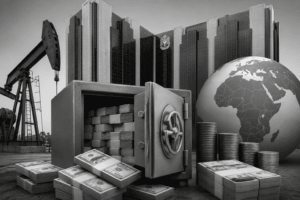
The energy industry remains one of the foundations of Nigeria’s economy, with the country’s natural resources continuing to shape revenues, foreign-exchange inflows and wider economic activity. That connection surfaced again in the news this week.
Crude oil taxes have increased Nigeria’s FX reserves to $52.5bn, says Cardoso
Nigeria’s external reserves have risen to $52.52 billion, up from $50.47 billion at the end of May. According to Central Bank Governor Olayemi Cardoso, the increase was largely driven by higher receipts from crude oil-related taxes and other third-party inflows.
While the numbers may seem technical, they point to something important. A larger reserve gives Nigeria more breathing room to pay for imports, meet its foreign exchange obligations and better absorb global economic shocks. Cardoso said the current reserve level is enough to cover about 11 months of imports, far above the international benchmark of three months. Over time, this could help support greater stability in the foreign exchange market and improve investor confidence in the economy.
The broader message remains the same: Nigeria’s foreign reserves are growing, supported by stronger oil-related inflows. If this trend continues, it could strengthen the country’s financial position and create a more stable environment for businesses looking to plan, invest and grow.
Here are a few other headlines that also caught my attention this week:
NCC, REA sign MoU to power telecom towers with renewable energy. Telecom towers are officially entering their solar era.
Tegbe: Metering gap partly responsible for power sector liquidity crisis. The lights may blink, but the bills never miss a shift.
FAAN unveils 2025 by-laws to improve airport operations. New airport rules just dropped. Please keep your outdated regulations in the overhead compartment.
‘It threatens jobs’ — OPSN asks PenCom to suspend proposed pension contribution hike. The pension pot may grow, but businesses fear their staff list could shrink.
Global FDI climbs 6% to $1.6 trillion as developing economies attract $901 billion. Looks like the investment pie grew.
NAFDAC begins nationwide mop-up of banned sachet alcohol. NAFDAC said alcohol should stop dressing like pure water.
Insurers race against the clock as capital audit drags days to deadline. Insurers have four days left to prove they can insure themselves.
Hormuz tanker traffic hits two-month low as tensions roil oil markets. Tankers are taking routes three times longer. Oil consumers will soon be contributing to their transport fare.
Nigerian factories pay up to 10 times for electricity more than Asian rivals, industry body says. Nigerian factories are not just making products; they are also generating their own electricity.
48 interconnected mini-grids under construction across 19 states, says REA MD. Small grids, big responsibility.
Just leaving that here.