

Africa’s Next Energy Boom Won’t Be Found. It’ll Be Built.
SEID Intel by Oluwatoyin
The human heart can pump blood every second of the day, but without arteries and veins carrying it around the body, none of our organs would get what they need to function.
Africa’s energy sector isn’t all that different.
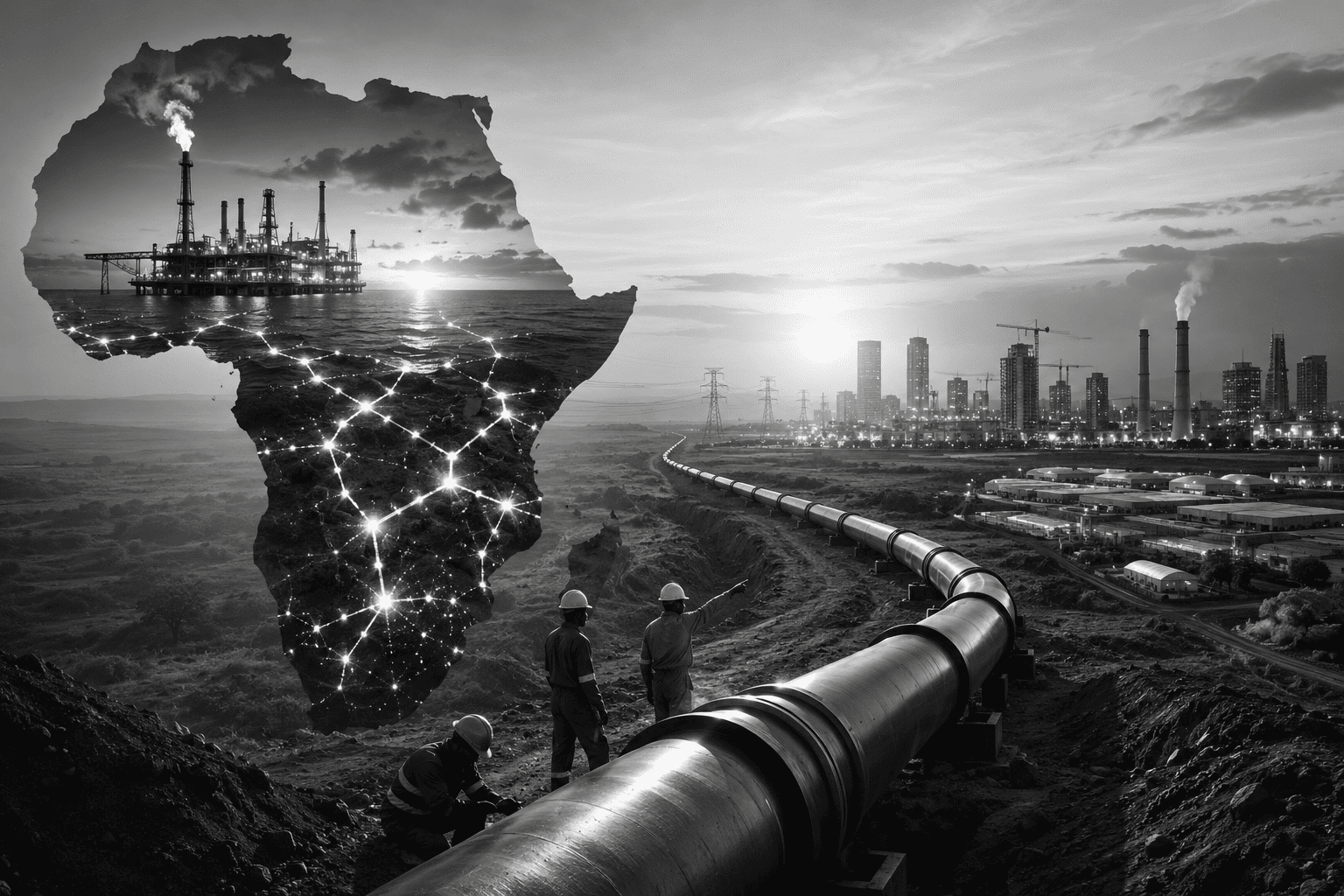
The continent has some of the world’s largest natural gas reserves, yet one of its biggest challenges isn’t finding more gas, it’s moving the gas that has already been discovered. That’s where pipelines and other midstream infrastructure come in.
The numbers put that challenge into perspective.
Nigeria has about 7,000 kilometres of gas pipelines. France has roughly 37,000 kilometres, despite having less than a third of Nigeria’s population. Across Africa, there are just over 30,000 kilometres of operational gas pipelines, while Europe has more than 227,000 kilometres.
The comparison isn’t about who has more gas. It’s about who has built the network to move it.
Without enough pipeline infrastructure, gas can’t easily reach power plants, manufacturers or industrial clusters. Businesses are forced to rely on more expensive energy sources, electricity generation comes under pressure and operating costs remain high. Those costs don’t stop at the factory gate, they eventually find their way into the prices people pay for goods and services.
That is why pipeline infrastructure is becoming a bigger part of the energy conversation. Projects such as the System 2B Pipeline reflect the wider focus on strengthening the networks that move energy from where it’s produced to where it’s needed. Whether through rehabilitating existing infrastructure or expanding new connections, the objective is the same: ensuring energy can move more efficiently across the value chain.
Closing that gap creates opportunities far beyond the energy sector.
Manufacturers gain access to more reliable and affordable energy. Industries become more competitive. Investors have greater confidence to expand. Over time, stronger industrial activity can mean more jobs, more local production and a more resilient economy.
Africa has never lacked natural resources.
The bigger question is whether it can build the networks that allow those resources to deliver their full value.
Africa’s next energy boom won’t be defined by what we discover.
It will be defined by what we build.

Value only matters when people can access it.
That idea doesn’t apply only to energy. It applies to wealth too.
SEC launches nationwide campaign to help Nigerians recover unclaimed dividends
Nigeria’s capital market is a good example. In recent years, investing has become far more accessible. Opening an investment account, buying shares and tracking your portfolio can now be done from a smartphone, a world away from the paperwork and physical processes that many investors in earlier years had to navigate. As more retail investors enter the market, the Nigerian Exchange has continued to gain global attention, recently emerging as the world’s best-performing stock market in dollar terms, ahead of South Korea.
That progress makes the SEC’s latest nationwide campaign especially timely. The Commission is helping Nigerians recover an estimated ₦270 billion in unclaimed dividends and other investment funds while also raising awareness about inherited investments that many families may not even know exist. It’s a reminder that building wealth isn’t just about investing. It’s also about keeping proper records, knowing where your investments are and ensuring the value you’ve created can eventually find its way back to you.
Here are a few other headlines that also caught my attention this week:
- 10 MDAs account for 84% of 2026 budget. If budgets had a VIP section, these 10 MDAs just reserved the whole table.
- NCC begins review of MVNO business rules, says 46 licences issued. Competition is calling… and the telecoms industry just picked up.
- NRS sets July 31 deadline for large companies to comply with e-invoicing. The days of “I’ll find the receipt later” are numbered.
- CBN launches digital FX tracker, issues guidelines for BDC dollar transactions with banks. Buying forex now comes with more paperwork than passport photos.
- FAAC: FG, states, LGs shared N2.5trn in June | VAT revenue increased by 7.5%. An interesting update from FAAC.
- Reps panel asks customs to name beneficiaries of N34trn import duty waivers. A closer look at import duty waivers.
- Nigeria’s inflation rate drops slightly to 15.91% amid steep food prices. The latest inflation figures are in.
- FG inaugurates advisory committee to drive fiscal, economic reform agenda. Another committee enters the chat.
- BOI secures €60m EIB facility to boost cocoa processing, chocolate manufacturing. The cocoa conversation is getting sweeter.
- AAAN partners South African creative school to tackle talent shortage in advertising industry. The advertising industry really said, “Back to class.”
Just leaving that here.