



What If the Next Big Manufacturing Opportunities Are Already in Plain Sight?
SEID Intel by Oluwatoyin
Think about the things we buy without giving them much thought.
The food in our kitchens. The clothes in our wardrobes. The packaging around the products we use. The medicines we take. Even the fabric we buy for weddings, birthdays, owambes and every occasion that somehow comes with another round of aso ebi.
At SEID, we wanted to look beyond these everyday purchases and ask a bigger question: what do they tell us about Nigeria’s manufacturing future?
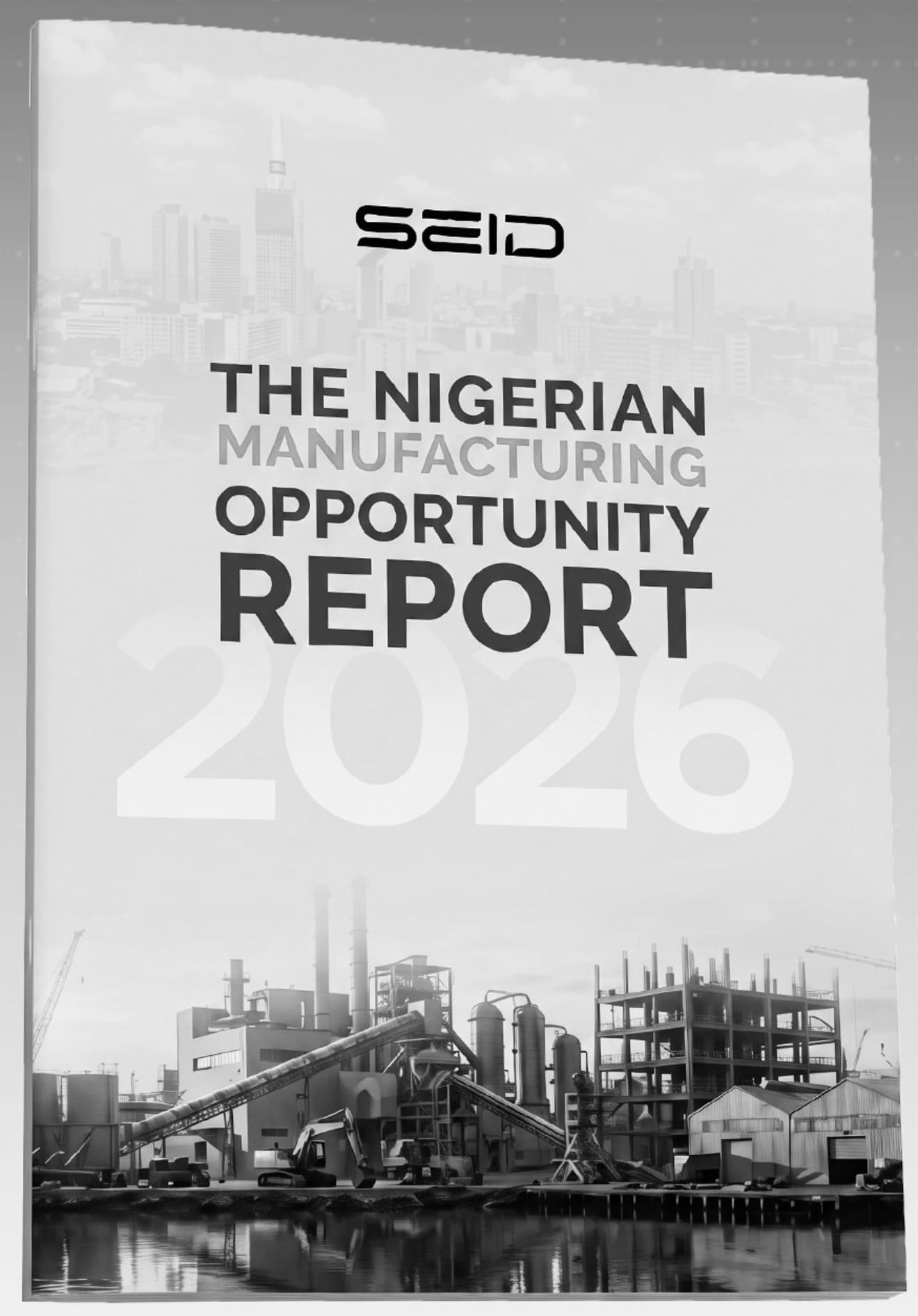
That question led to the Nigerian Manufacturing Opportunity Report 2026, which SEID launched at the 54th Annual General Meeting of the Manufacturers Association of Nigeria (MAN).
And textiles offer a particularly interesting place to start.
Because if aso ebi has taught us anything, it is that Nigerians will always find a reason to buy fabric. In 2025, Nigeria’s textile, apparel and leather market recorded an estimated $6.77 billion in net local demand.
Yet that demand does not translate entirely into local production. Nigeria imported ₦1.06 trillion worth of textiles in 2025, while textile exports stood at just ₦16.55 billion.
That is more than a trade story. It is a signal of the opportunity sitting within a market Nigerians are already buying from every day.
And textiles are only one piece of the picture.
The report examines five major manufacturing subsectors across Nigeria’s 36 states, looking at where industries are already developing, where state-level strengths are emerging and what could unlock deeper local value creation.
Because the opportunity is not simply in making the final product.
It is in everything that comes before it too: the inputs, processing, skills, infrastructure and industrial systems that allow manufacturing ecosystems to grow.
And that is where the report takes the conversation next.
The opportunity is already in the things we buy every day. Now, it is about understanding where the next layer of value can come from.
Explore the full Nigerian Manufacturing Opportunity Report 2026 at www.seidintel.com.
Speaking of what Nigerians consume, I came across this story that caught my attention. It is another interesting look at how consumer demand is shaping the market.
Livestock ministry, CBN to meet over single-digit loan for farmers
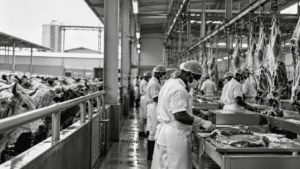
The Ministry of Livestock Development says it will work with the Ministry of Finance and the Central Bank of Nigeria to secure single-digit interest rates and longer-term loans for livestock operators. The move is aimed at making it easier for businesses to invest in ranching, feedlots and modern processing facilities, with the minister pointing to the need for longer repayment periods that match the time it takes for agricultural investments to mature.
The announcement came during a visit to an ultra-modern livestock processing facility in Lekki that processes about 250 cows daily. Beyond meat, the facility also processes by-products such as hides, horns and hooves, creating inputs for other industries. With plans for more certified abattoirs and laboratories across the country, the story points to a wider opportunity: building a stronger livestock value chain that creates jobs, supports local processing and captures more value from what Nigeria already produces and consumes.
Here are a few other headlines that also caught my attention this week:
NCC: Nigeria’s data consumption increased by 47% in one year. Nigeria’s data appetite is getting serious.
North-east governors announce plan to establish regional airline. The North-East wants to get its own wings.
NASRDA DG: Procurement of six new satellites 95% complete. Nigeria’s space game is getting a serious upgrade.
DisCos’ revenue rose by 7.1% to N1.2trn in H1 2026, says NERC. Looks like the collection game is picking up.
Nigeria, India agree to strengthen aviation, technical cooperation. Nigeria and India said, “Let’s take this relationship to new heights.”
FG launches digital postcode system to improve business, emergency services. Finally, an address that doesn’t need “after the third turning, you’ll see a blue gate.”
FG begins talks with DisCos on 24-hour power zones in Lagos, Abuja, Kano. 24-hour power? Now that’s a plot twist.
CBN: Banks’ improved capital base must translate into wider access to finance. CBN said “nice balance sheet, but can we get a loan?”
Gusau airport passes ICAO quality inspections ahead of commercial operations. Gusau is officially cleared for takeoff.
After August picketing, airline operators threaten to shut down services if unions’ disruptions recur. Airlines said: disrupt us again and everybody stays home.
Just leaving that here.