



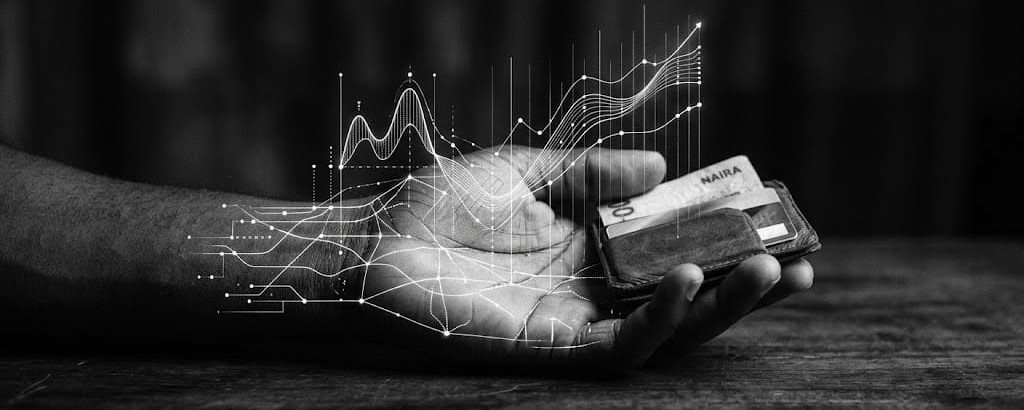
AI and the Future of Finance
SEID Intel by Oluwatoyin
For many Nigerians, January comes with a familiar financial pattern. December is often characterized by increased spending, rising travel, family obligations, and celebrations with friends and loved ones that quietly replace budgeting. Then January arrives with school fees, transport costs, rent, and the long-standing joke that the month is “60 days long.” Behind the humour, however, is a financial reality many already understand too well: the effects of festive spending often stretch far into the new year.
As financial behaviour becomes increasingly digital, recurring patterns like December spending and January financial pressure are becoming easier for financial systems to predict. Artificial intelligence is gradually positioning itself to become one of the biggest shifts the financial sector may experience in the coming years, particularly in how financial systems understand human behaviour. Instead of functioning only as platforms for transfers and payments, financial systems are gradually becoming more intelligent, predictive, and behaviour-driven.
At SEID, these are the types of shifts we continue to track through market intelligence and consumer insight: how economic realities, behavioural patterns, and digital adoption are reshaping industries and everyday life. SEID’s Nigerian Consumer Outlook Report 2025 highlights how consumers are becoming more intentional with spending, increasingly digital in financial behaviour, and more adaptive in how they navigate economic pressure. AI-driven financial systems are becoming the next phase of that shift.
Globally, parts of this transformation are already visible. In China, Ant Group, the company behind Alipay, uses transaction history, spending behaviour, and digital activity to recommend savings, investments, and financial products almost automatically. Over time, similar systems are expected to become more common within Nigeria’s financial ecosystem, using transfers, POS payments, utility bills, ride-hailing transactions, wallet activity, repayment behaviour, betting patterns, and other day-to-day digital financial behaviour to build more personalised financial experiences.
This means finance gradually becomes more predictive than reactive. A young professional whose spending historically rises every December could eventually have a “Smart Reserve” wallet automatically structured around their financial habits. Months before December arrives, the system already understands the spending pattern and quietly begins setting aside small amounts based on income behaviour and transaction history.
The same behavioural intelligence could also reshape lending and investment decisions. Instead of relying mainly on salary structures or borrowing history alone, financial institutions could build a broader picture of financial responsibility using repayment patterns, spending habits, utility payments, ride-hailing activity, betting behaviour, and transaction history over time. Someone with moderate income but stable financial habits could eventually be viewed as lower risk than a higher earner with unstable spending behaviour or excessive gambling activity.
AI could also influence how investment recommendations are made. Instead of static recommendations, systems could continuously study spending pressure, savings behaviour, and transaction patterns before adjusting financial suggestions in real time. For example, if a user’s financial behaviour begins to show signs of instability through rising debt, irregular income flow, or excessive betting activity, the system could prioritise lower-risk financial options instead of recommending aggressive investment products.
At a wider level, this could reshape parts of the Nigerian economy. Better lending decisions may reduce loan defaults. Small businesses may gain easier access to credit, while financial institutions make faster and more informed decisions using behavioural data instead of relying solely on traditional banking records.
Nigerians do not joke with their money. Trust, privacy, and data protection will remain major concerns as financial systems become more intelligent and more connected to personal behaviour.The future of finance may not simply become digital.
It may become deeply behavioural.
The other day, I was thinking about how much Nigeria contributes to music, film, fashion, and entertainment globally, yet conversations around tourism infrastructure still feel relatively small compared to the scale of the industry itself. Then I came across this:

FG plans 7-star hotels, entertainment arena to boost tourism sector
The proposed projects include the development of 7-star hotels, a modern entertainment and concert arena, and the revitalisation of national museums through public-private partnerships. The discussions were held during a meeting between the Infrastructure Concession Regulatory Commission (ICRC) and the Ministry of Art, Culture, Tourism and the Creative Economy in Abuja.
The plans also include possible collaborations with Netflix around film production, training, and broader creative industry development. According to Tourism Minister Hannatu Musawa, Nigeria already has global recognition through its music, fashion, and food culture, but still needs stronger infrastructure to better support the tourism and creative economy.
According to Tourism Minister Hannatu Musawa, the sector could contribute significantly to the economy if some of these infrastructure gaps are addressed over time.
Here’s hoping some of these conversations eventually move from proposals to real spaces people can actually experience.
Here are a few other headlines that also caught my attention this week:
- Nigeria to host West and Central African port chiefs meeting in Lagos. Lagos is hosting the conversations shaping the future of regional trade. Busy city, bigger conversations.
- FG says Airbus has proposed establishment of maintenance, hangar facilities in Nigeria. The future of Nigeria’s aviation sector might just need fewer stopovers and more local solutions.
- S&P upgrades Nigeria’s rating to ‘B’, citing FX market reforms and improved oil output. Another ratings upgrade for Nigeria. Financial analysts just got fresh talking points.
- Tony Attah says 100,000 Nigerians die yearly over lack of access to cleaner energy. Cleaner energy remains one of those conversations that keeps returning for a reason.
- TCN inaugurates 330kV transmission line project in Edo to enhance power supply. More transmission infrastructure for the national grid. The generators are monitoring the situation closely.
- Nigeria’s inflation rate rises to 15.6%. Rising food prices remain a major concern as families continue to navigate increasing living costs.
- FCCPC backs LASERC consumer protection reforms in the Lagos electricity sector. The electricity sector may finally be entering its “pay for what you actually use” era.
- ATCON president says telecoms network issues won’t persist beyond 2026. Telecom operators say poor service is not intentional. Nigerians and their buffering videos are processing that information.
- Nigeria’s food inflation surpasses the headline rate for the first time in eight months. The latest figures highlight the growing strain rising food prices may have on everyday families and small businesses.
- Driven by South Africa, Egypt, and Nigeria, McKinsey says Africa’s banking sector revenue surpassed $100bn in 2025. Africa’s banking sector has crossed the $100 billion mark, reflecting the scale and growth of the industry across the continent.
Just leaving that here.